The nineteenth century witnessed a remarkable proliferation of new religious movements, esoteric brotherhoods, revived pagan traditions, and syncretic spiritual philosophies across Europe and North America. The major world religions — Christianity, Islam, Hinduism, Buddhism — had each undergone centuries of institutionalization, and for many seekers they seemed unable to address the questions raised by modernity: the challenge of Darwinian science, the social transformations of industrialization, the influx of Asian religious ideas into the West, and an intensifying interest in personal spiritual experience over doctrinal authority. This section documents those groups and traditions whose adherents believe the established world religions have failed to address their deepest concerns, and who have sought meaning in alternative spiritual paths.
Historical Context: The 19th-Century Spiritual Explosion
Several converging historical currents fed the explosion of alternative spirituality in the nineteenth century. The Romantic movement had valorized individual experience, nature, and the mythological imagination against Enlightenment rationalism. The opening of colonial trade routes brought previously obscure Hindu, Buddhist, and Egyptian texts and ideas to European audiences. The Fox Sisters' 1848 claims of spirit communication launched Spiritualism as a mass phenomenon in the United States and Britain. And the breakdown of Protestant consensus produced a seemingly endless proliferation of new Christian sects — Mormons, Seventh-day Adventists, Jehovah's Witnesses, Christian Scientists — alongside movements that departed more radically from Christian orthodoxy.
Many of these new groups drew on the messianic tradition, proclaiming imminent transformation of the world or the advent of a new spiritual dispensation. Others drew on emerging political theories — socialism, anarchism, feminism — wedding them to spiritual frameworks. Eastern thought began to filter into the USA and Europe through translations, travelers, and the lectures of Hindu teachers such as Swami Vivekananda, whose appearance at the 1893 World's Parliament of Religions in Chicago electrified Western audiences.
Theosophy and the Western Esoteric Tradition
The Theosophical Society, founded in New York in 1875 by Helena Petrovna Blavatsky and Henry Steel Olcott, became one of the most influential organizations in the history of Western alternative spirituality. Theosophy drew on Hindu and Buddhist philosophy, Neoplatonism, Hermeticism, and Kabbalah to construct an elaborate cosmological and evolutionary system. Its central claims — that all religions share an underlying unity, that the universe evolves through cycles of spiritual development, and that a hidden Brotherhood of Masters guides human spiritual progress — shaped an enormous range of later movements, from Anthroposophy (Rudolf Steiner's offshoot) to the New Age movement of the late twentieth century.
The Western esoteric tradition more broadly — encompassing Freemasonry, Rosicrucianism, ceremonial magic, and the occult revival of the late nineteenth century (associated with figures such as Eliphas Lévi and the Hermetic Order of the Golden Dawn) — provided a body of practice and symbolic vocabulary that continues to circulate in contemporary alternative spirituality.
Neo-Paganism and Wicca
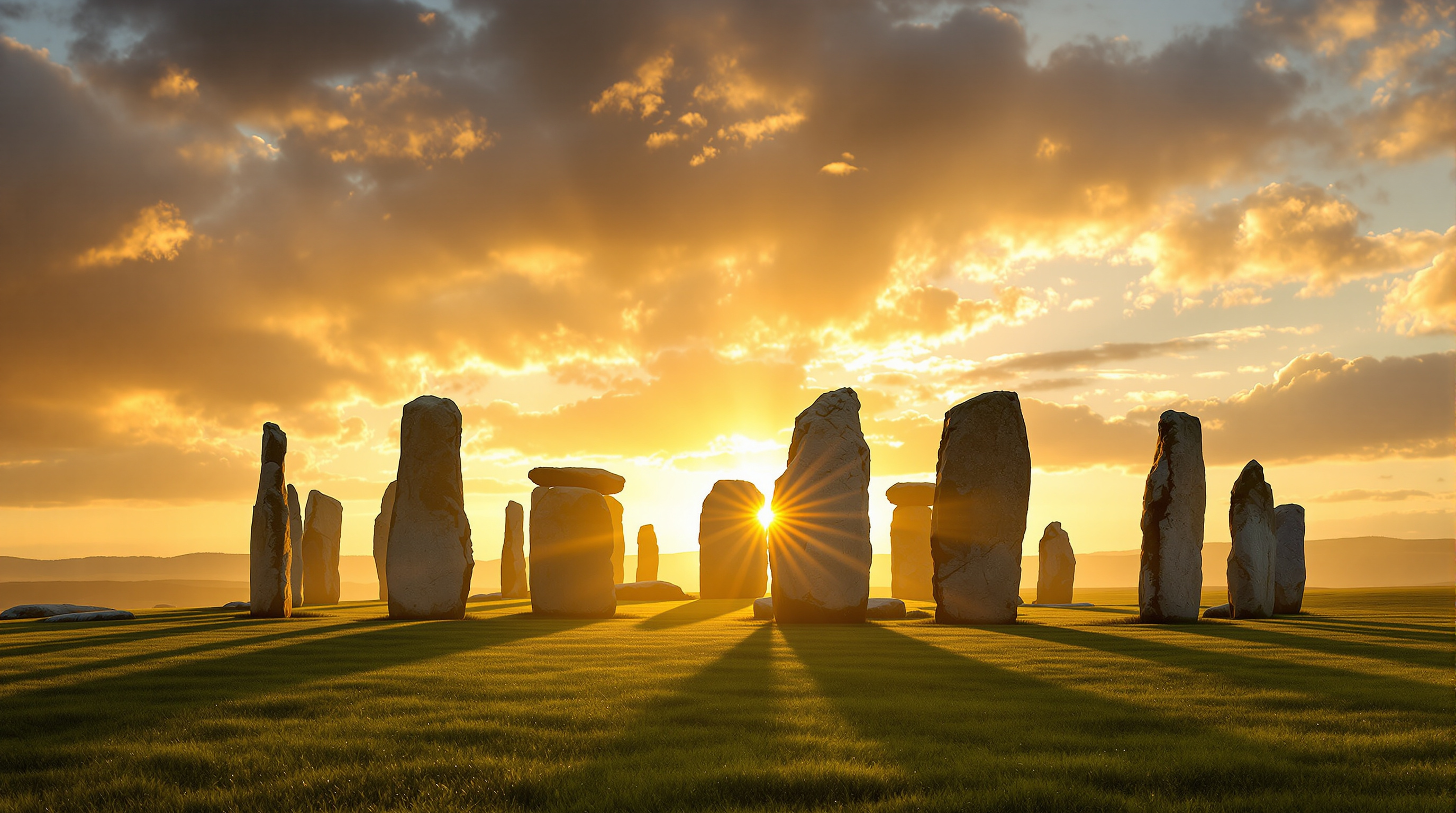
Pagan traditions became a focus for individuals who would define neo-paganism for the twentieth century. Neo-paganism encompasses a wide range of contemporary movements that seek to reconstruct, revive, or reinvent the religious traditions of pre-Christian Europe and the ancient world. Wicca, the most widely practiced form of neo-paganism, was publicly introduced by Gerald Gardner in Britain in the 1950s. It draws on folk magic traditions, ceremonial magic, and the religious naturalism of figures such as Margaret Murray, venerating a Goddess and a Horned God and practicing seasonal rites organized around the eight-spoked Wheel of the Year.
Other neo-pagan currents include Heathenry (reconstruction of Norse and Germanic religion), Celtic reconstructionism, and Hellenic polytheism. These movements typically emphasize a reverence for nature, the reality of multiple deities, the validity of pre-Christian European spiritual practices, and the importance of lived ritual and community over doctrinal belief.
New Age Spirituality
The New Age movement emerged as a recognizable cultural phenomenon in the 1970s and 1980s, drawing heavily on Theosophical ideas about spiritual evolution, on human potential psychology, on Asian meditation practices, on channeled teachings, and on astrological and other divinatory traditions. At its core is a conviction that human consciousness is undergoing a transformation — the dawning of a new spiritual age — and that individuals can accelerate their own spiritual development through a wide range of techniques and practices.
The New Age is marked less by doctrinal coherence than by a characteristic spiritual marketplace sensibility: practitioners typically assemble personal spiritual paths by drawing eclectically on multiple traditions — crystal healing, astrology, past-life regression, yoga, shamanism, energy medicine — without exclusive commitment to any single tradition or institution.
Spiritualism
Spiritualism — the belief that the spirits of the dead survive death and can communicate with the living, typically through the intermediary of a medium — attracted tens of millions of adherents in the United States and Britain from the 1850s onward, reaching peak popularity in the aftermath of the massive bereavement caused by the American Civil War and, later, the First World War. Though its credibility was repeatedly damaged by exposés of fraudulent mediumship, Spiritualism gave rise to organized churches and denominations that survive to this day, and its influence can be traced in channeling and psychic practices that remain widespread in contemporary alternative spirituality.
Contemporary Significance
Today, alternative spirituality represents a significant and growing portion of religious life in post-industrial societies. Surveys consistently find growing numbers of people — especially in Europe, North America, and Australia — who identify as "spiritual but not religious," drawing on multiple traditions without institutional affiliation. The movements documented here have collectively shaped this landscape, offering paths to meaning and practice outside the boundaries of the established world religions.