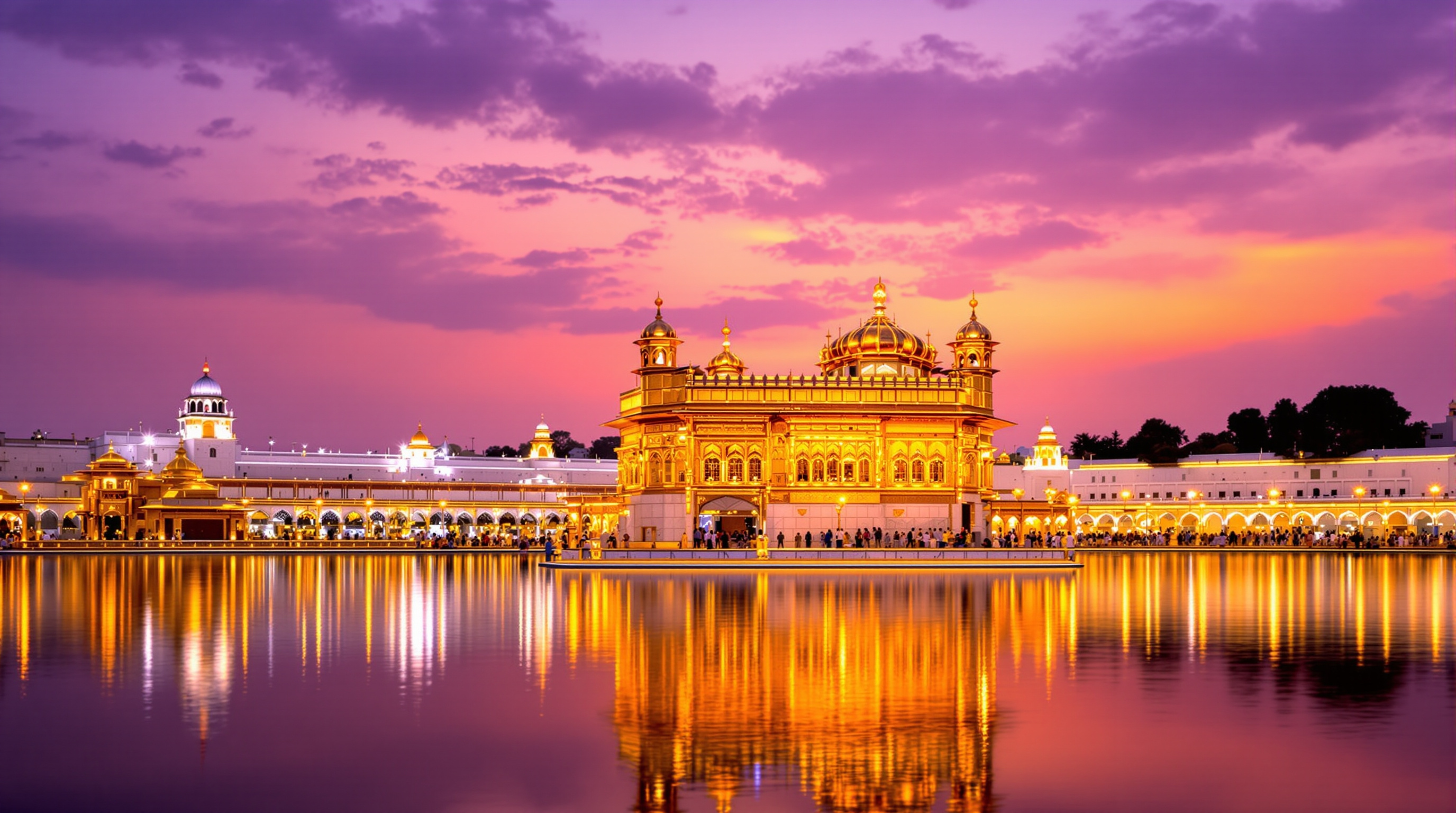
Sikhism is one of the youngest of the world's major religions, founded in the Punjab region of South Asia around 1500 AD. With approximately 25 to 30 million adherents worldwide, it ranks as the fifth-largest religion in the world. Monotheistic in theology, egalitarian in social vision, and practical in its ethical demands, Sikhism represents a distinctive synthesis of devotional religion and engaged worldly life.
Guru Nanak and the Origins of Sikhism
The tradition was founded by Guru Nanak, who lived from 1469 to 1539 AD in the village of Talwandi (in present-day Pakistan), the first of the ten Gurus (teachers) who shaped Sikh doctrine and community. Born into a Hindu family in a region profoundly shaped by both Hindu and Islamic traditions, Nanak underwent a transformative spiritual experience at around age thirty, after which he declared: "There is no Hindu, there is no Muslim." This declaration encapsulated his rejection of religious boundaries in favor of direct communion with the one divine reality he called Waheguru ("Wondrous Lord").
Nanak spent decades traveling across South Asia and into the Middle East, engaging scholars, saints, and ordinary people, before settling in the town of Kartarpur, where he established a community (sangat) and instituted shared devotional singing (kirtan) and communal meals (langar) as central practices. These institutions remain defining features of Sikh life to this day.
The Ten Gurus
Sikh doctrine holds that the same divine light passed through a succession of ten Gurus, each building on the teachings of his predecessor:
- Guru Nanak (1469–1539) — Founder; established the theology and community structure
- Guru Angad (1504–1552) — Standardized the Gurmukhi script for Punjabi
- Guru Amar Das (1479–1574) — Expanded the langar institution and opposed caste discrimination
- Guru Ram Das (1534–1581) — Founded the city of Amritsar
- Guru Arjan (1563–1606) — Compiled the Adi Granth (1604); constructed the Harmandir Sahib (Golden Temple); was martyred by the Mughal Emperor Jahangir
- Guru Hargobind (1595–1644) — Introduced the concept of miri-piri (temporal and spiritual authority combined)
- Guru Har Rai (1630–1661)
- Guru Har Krishan (1656–1664) — Became Guru at age five; died at eight
- Guru Tegh Bahadur (1621–1675) — Martyred by the Mughal Emperor Aurangzeb for defending religious freedom
- Guru Gobind Singh (1666–1708) — Founded the Khalsa; declared the scripture as the eternal living Guru
The Guru Granth Sahib
The central object of Sikh devotion and authority is the Guru Granth Sahib — the sacred scripture, originally compiled in 1604 by the fifth Guru, Arjan, under the title Adi Granth ("The Original Book"). It was later expanded by Guru Gobind Singh and declared the permanent and living Guru of the Sikhs in perpetuity. No further human Gurus were to succeed him.
The Guru Granth Sahib is a collection of nearly 6,000 hymns composed by six of the ten Sikh Gurus, as well as by Hindu and Muslim saints and poets from various castes and regions, including Kabir, Farid, and Ravidas. This inclusion of non-Sikh voices reflects the tradition's conviction that divine truth transcends religious boundaries. The text is written primarily in Punjabi using the Gurmukhi script, with passages in Sanskrit, Hindi, Persian, and other languages.
In every gurdwara (Sikh house of worship), the Guru Granth Sahib is accorded the reverence given to a living Guru: it is ritually opened in the morning with ceremony, kept under a canopy (palki), and wrapped and placed in a resting chamber at night. Passages are read continuously in an unbroken recitation known as the akhand path.
Core Beliefs
Sikhism is founded on several interlocking theological commitments:
- Ik Onkar ("One God"): The opening declaration of the Guru Granth Sahib affirms the oneness of the divine reality, beyond form, gender, or sectarian definition.
- Naam Simran: Continuous, devoted remembrance of God's name through meditation, prayer, and hymn-singing.
- Seva: Selfless service to others as an expression of devotion to God. The institution of the langar — a free communal kitchen open to all, regardless of caste, religion, or status — embodies this principle.
- Equality: Sikhism explicitly rejects caste hierarchy, gender discrimination, and religious exclusivism. All humans are considered equal before Waheguru.
- Kirat Karni: Honest labor; earning one's livelihood by honorable means.
- Vand Chhakna: Sharing one's earnings and resources with those in need.
The Khalsa and the Five K's
In 1699, Guru Gobind Singh founded the Khalsa ("the Pure"), a community of initiated Sikhs bound by a code of discipline (rehat maryada) and identifiable by five articles of faith known as the Five K's (Panj Kakars): uncut hair (kesh), a wooden comb (kangha), a steel bracelet (kara), a short undergarment (kachera), and a ceremonial steel sword (kirpan). Khalsa Sikhs undergo a formal initiation ceremony (amrit sanchar) and adopt the surnames Singh ("lion," for men) or Kaur ("princess," for women).
Contemporary Sikhism
Today, the largest Sikh population remains in the Punjab region of India, with major diaspora communities in the United Kingdom, Canada, the United States, and Australia. The Harmandir Sahib (Golden Temple) in Amritsar is the spiritual and cultural center of the faith, welcoming hundreds of thousands of visitors daily and serving free meals from its langar to all who arrive.