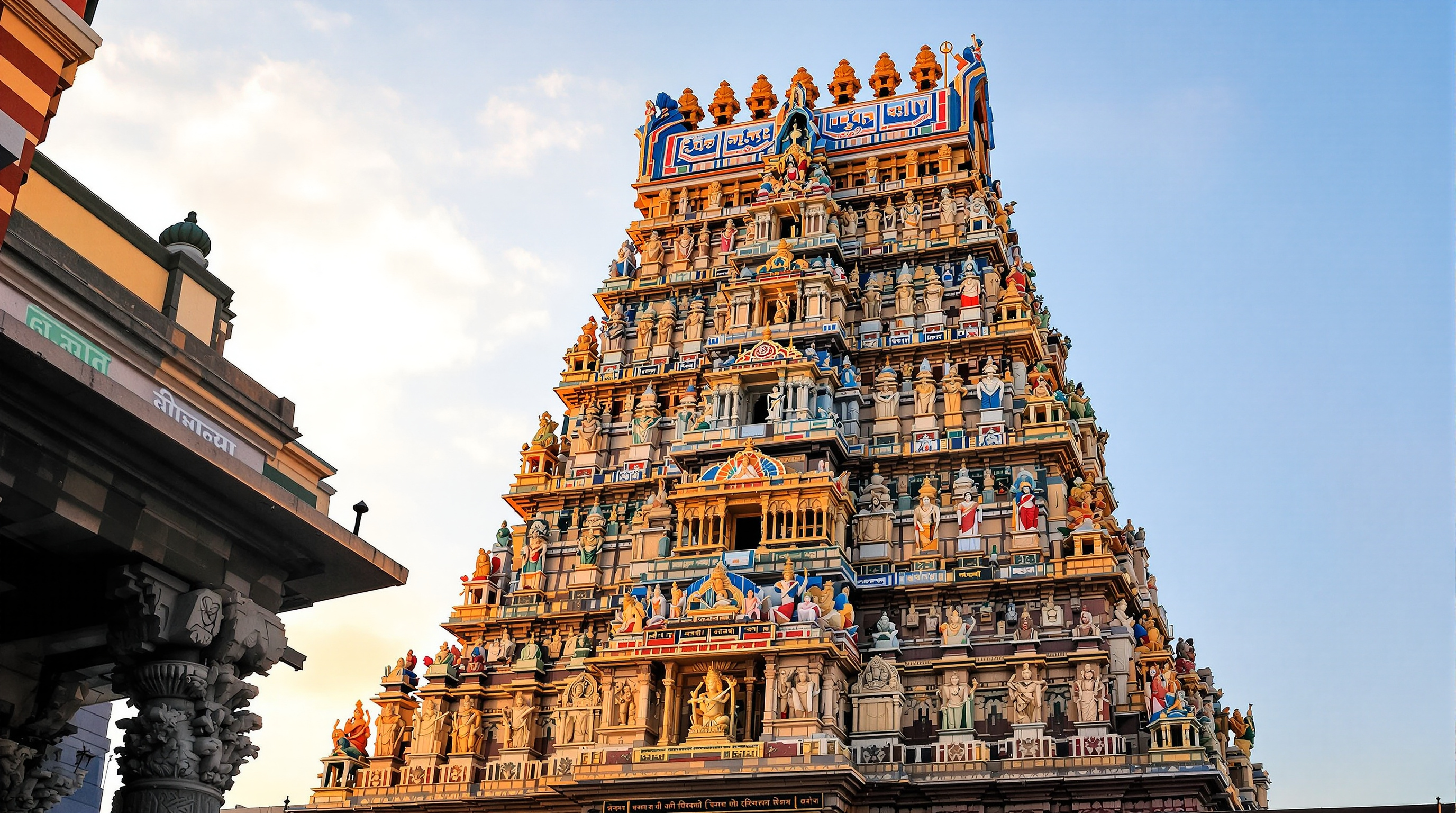
Hinduism is the European name for what its practitioners call Sanatana Dharma — the Eternal Law or the Eternal Way. The name "Hindu" derives from the Sanskrit word sindhu, meaning river, specifically the Indus River that runs through the northwestern subcontinent. In time, the land beyond this river became known as Hind, and the people who lived and practised their religious traditions there became known as Hindus. The religion itself, as understood from within, has no founding moment and no single human founder — it is understood as the eternal truth about the nature of reality, which sages (rishis) perceived and transmitted, not invented.
The Challenge of Definition
Hinduism resists easy definition more than almost any other major world religion. It is not a single dogmatic system with a binding creed; it is more accurately described as a family of related traditions — philosophical schools, devotional movements, ritual systems, and regional practices — that share certain scriptural inheritances, cosmological frameworks, and social structures (notably the caste system, or varna), while differing substantially in theology, practice, and emphasis.
Within what is called Hinduism, one finds strict non-dualists (Advaita Vedantins) who hold that there is ultimately only one reality, Brahman, and that the individual self (atman) is identical to it; qualified non-dualists (Vishishtadvaita) who hold that individual selves and the world are real but are modes of Brahman; and dualists (Dvaita) who hold that God, the individual self, and the world are permanently distinct. These are not minor disagreements but fundamental positions about the nature of ultimate reality — positions elaborated with great philosophical sophistication over more than a thousand years of debate.
Every tribal and regional geography contributed its own local divinities into the vast Hindu pantheon, resulting in an extraordinary range of divine figures and images. Yet this apparent polytheism is, for most Hindu theologians, a manifestation of the one ultimate reality viewed from different angles, at different levels of devotion and understanding. The many gods of popular Hinduism are understood by philosophical Hinduism as aspects or manifestations of a single divine ground.
The Vedas
At the foundation of Hindu religious and philosophical thought lies the Vedic literature — a corpus of texts composed in Vedic Sanskrit over a period extending from perhaps 1500 BCE to 500 BCE or later. "Veda" means knowledge or wisdom, and the Vedas are understood as shruti — that which was "heard" by the ancient seers in a state of profound meditative insight. They are thus qualitatively different from later texts composed by human authors.
There are four Vedas: the Rigveda, a collection of 1,028 hymns addressed to the Vedic deities; the Samaveda, a liturgical compilation of melodies drawn largely from the Rigveda; the Yajurveda, containing prose formulas for ritual use; and the Atharvaveda, a collection of spells, charms, and philosophical hymns representing a somewhat different stratum of tradition. Each Veda is further subdivided into sections addressing different aspects of ritual and knowledge.
From the ritual portions of the Vedas (the Brahmanas and Aranyakas) emerged the Upanishads — the philosophical texts that conclude each Vedic corpus (hence also called Vedanta, "end of the Veda"). The twelve major Upanishads, which include the Brihadaranyaka, Chandogya, Taittiriya, Mandukya, and Kena Upanishads among others, are an exploration of metaphysical themes: the nature of Brahman (ultimate reality), the nature of atman (the individual self), and their relationship. The equation "tat tvam asi" — "thou art that" — expressed in the Chandogya Upanishad, encapsulates the Advaita insight that the individual self and ultimate reality are not ultimately different.
The Epics and the Bhagavad Gita
Beyond the Vedic corpus, two great epic poems — smriti (that which is "remembered," composed by human authors rather than divinely revealed) — have shaped Hindu culture profoundly. The Mahabharata, the world's longest epic at approximately 100,000 verses, recounts the conflict between two branches of the Kuru dynasty; embedded within it is the Bhagavad Gita ("Song of the Lord"), perhaps the single most widely read Hindu scripture. In the Gita, the god Krishna instructs the warrior Arjuna in the duties of his station and the nature of the self, the cosmos, and devotion. The Ramayana, the second great epic, narrates the life of Rama, an avatar of the god Vishnu, and his quest to rescue his wife Sita from the demon king Ravana.
Major Philosophical Schools and Devotional Traditions
The six classical schools of Hindu philosophy (darshana) — Nyaya, Vaisheshika, Samkhya, Yoga, Mimamsa, and Vedanta — each offer systematic accounts of epistemology, metaphysics, and the means of liberation (moksha). The Yoga school, most accessible to modern audiences through Patanjali's Yoga Sutras, provides a practical framework for the disciplined development of consciousness leading to liberation.
Devotional Hinduism (bhakti) centres on loving worship of a personal deity — most commonly Vishnu (and his avatars Rama and Krishna) or Shiva — as the path to liberation. The bhakti movements of medieval India produced a rich literature of devotional poetry in regional languages, making Hindu spirituality widely accessible beyond Sanskrit scholarship.
For scholarly reference, the Encyclopaedia Britannica entry on Hinduism is comprehensive. The sacred-texts.com Hindu section provides texts including the Upanishads, Bhagavad Gita, and Vedic hymns in translation. The Wikipedia article on Hinduism covers the tradition's extraordinary scope. The Stanford Encyclopedia of Philosophy entry on epistemology in classical Indian philosophy addresses the Hindu philosophical schools in depth.
See also Buddhism, which emerged from the Vedic milieu of ancient India in deliberate tension with Brahmanical orthodoxy, and Sikhism, which arose in the Punjab as a synthesis drawing on Hindu and Islamic devotional streams.