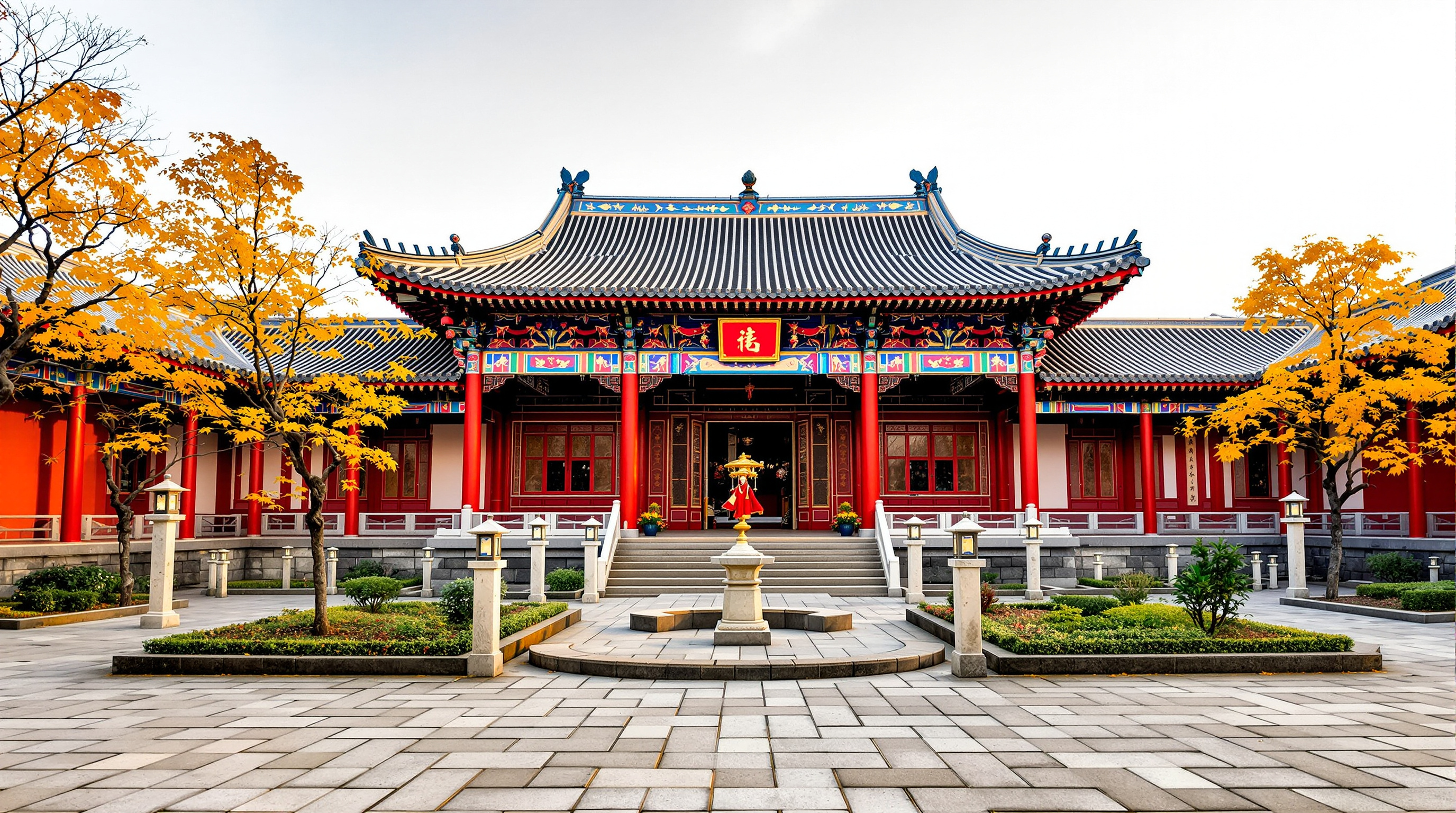
Confucianism is one of the most influential ethical and philosophical traditions in human history, shaping the social, political, and moral fabric of China and much of East Asia for over two millennia. Known in Chinese as Rújiā ("School of the Learned" or "School of the Scholars"), the tradition is associated above all with the philosopher Kong Zi — known in the West by the Latinized form of his name, Confucius — who lived from approximately 551 to 479 BC.
The Life of Confucius
Confucius was apparently born in the state of Lu of the Zhou kingdom, in what is today Shandong province, China. According to tradition, he worked as a minor civil servant and teacher under the Zhou dynasty, rising at some points to positions of administrative authority before spending years traveling among the states of China in an effort to persuade rulers to adopt his principles of moral governance. He returned to Lu late in life and devoted his final years to teaching and to the editing of ancient texts.
A temple was erected in Qufu in his honor a year after his death, and over subsequent centuries Confucius was elevated to near-divine status in Chinese official culture. The complex of temples and cemeteries in Qufu — designated a UNESCO World Heritage Site — stands today as one of the most important centers of cultural pilgrimage in East Asia.
Core Teachings and Ethics
Confucianism was not originally conceived as a religion in the Western sense — it does not center on a personal god, eschatology, or revealed scripture. It is better understood as a comprehensive ethical system and philosophy of social order. Its central preoccupations are the cultivation of personal virtue, the ordering of human relationships, and the proper governance of society.
Several foundational concepts define the Confucian worldview:
- Ren (benevolence, humaneness, or loving others): Often considered the supreme Confucian virtue, ren encompasses compassion, empathy, and the active concern for the wellbeing of others. It is the inner quality from which all ethical conduct flows.
- Li (ritual propriety, rites, or decorum): The external forms of correct social conduct — ceremonies, etiquette, and ritual — that maintain harmony and respect within relationships and institutions. For Confucius, performing rites properly was both an expression of inner virtue and a means of cultivating it.
- Yi (righteousness or moral rightness): The disposition to do what is right regardless of personal advantage, grounded in a sense of justice and duty.
- Zhi (moral wisdom or discernment): The capacity to recognize what is right in a given situation.
- Xin (integrity or faithfulness): The quality of being true to one's word and consistent in one's character.
- The Five Relationships: Confucian social ethics is structured around five fundamental human relationships — ruler and minister, parent and child, husband and wife, elder and younger sibling, and friend and friend — each carrying reciprocal duties and obligations. These relationships provide the framework within which virtue is practiced and social harmony sustained.
Learning, Ritual, and Moral Judgment
Confucian learning concerns the formation of judgment as well as familiarity with classical texts. The ideal of the junzi, often translated as the exemplary person, joins ethical aspiration to conduct in ordinary relationships. Study, reflection, and attention to one's own behavior belong together. Knowing the language of virtue does not by itself settle how to act when obligations compete.
Ritual provides a setting for this work. Ceremonies, mourning observances, and everyday forms of respect give relationships a visible shape. In Confucian ethics, their meaning depends on the disposition with which they are performed: outward correctness and inward sincerity are related concerns. This connection makes ritual more than a collection of rules about etiquette, while leaving room for questions about which forms suit a particular situation.
Respect for a parent or ruler can also involve remonstrance — expressing a reasoned objection when conduct is wrong. The tension between deference and moral responsibility is therefore part of Confucian ethical discussion. Hierarchical relationships carry obligations for those exercising authority as well as those responding to it.
Key Texts and Scriptures
The foundational Confucian texts are known collectively as the Four Books and the Five Classics. The Analects (Lunyu) — a collection of sayings and conversations of Confucius recorded by his disciples — is the most direct window into his thought. The Mencius records the teachings of Mencius (Meng Zi, c. 372–289 BC), who extended Confucian ethics and argued for the innate goodness of human nature. The Great Learning and the Doctrine of the Mean round out the Four Books.
The Five Classics, which Confucius is traditionally said to have edited, include the Book of Documents, the Book of Songs, the Book of Rites, the Book of Changes (I Ching), and the Spring and Autumn Annals. These texts served for centuries as the basis of Chinese civil service examinations, ensuring that Confucian thought permeated government and educated culture alike.
Major Schools and Later Development
A large number of different schools of thought emerged from the study of Confucian texts. Neo-Confucianism, which flourished from the Song dynasty (960–1279 AD) onward, represents perhaps the most significant intellectual development in the tradition. Thinkers such as Zhu Xi synthesized Confucian ethics with Buddhist and Taoist metaphysics, producing a comprehensive philosophical system that became orthodoxy for state examinations across China, Korea, Japan, and Vietnam.
A rival Neo-Confucian school associated with Wang Yangming (1472–1529) emphasized the unity of knowledge and action and located moral authority in the individual mind rather than external texts and rituals. This school proved especially influential in Japan and Korea.
Confucianism in Contemporary Society
Though institutionalized Confucianism was disrupted by the upheavals of the twentieth century — particularly in China during the Cultural Revolution — the tradition's values have shown remarkable resilience. Scholars speak of a "Confucian cultural sphere" encompassing much of East Asia, where family-centered values, respect for education, and a strong ethic of social obligation continue to shape everyday life and governance. Contemporary "New Confucianism" engages actively with modern philosophical and political thought, exploring how classical insights might address questions of democracy, human rights, and global ethics.